

Have you ever closed your eyes and pictured Santa Claus? I bet you see a big, jolly guy with a white beard, rosy cheeks, and a red suit. That chubby guy who laughs “ho ho ho” and fits down chimneys like it’s nothing. Well, here’s something wild—the way you picture Santa wasn’t always like this! Before the 1930s, Santa looked totally different. He was smaller, sometimes even elf-like! So what changed everything? A Coca-Cola advertisement.
Let me tell you this really cool story about how your favorite holiday guy got his famous makeover.
The Many Faces of Saint Nick
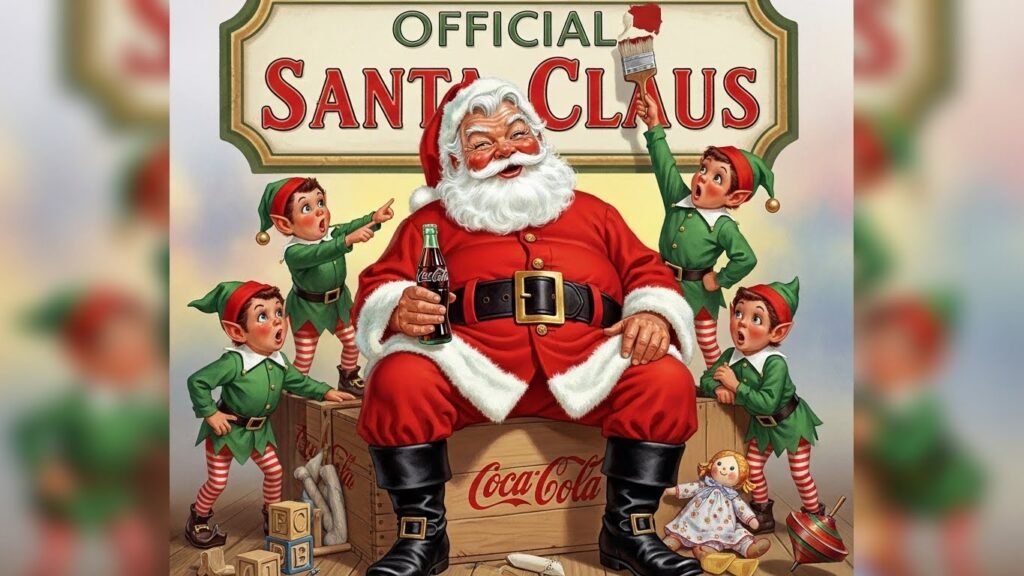
Before we get to the big change, let’s talk about where Santa even came from. Santa Claus is based on a real person—Saint Nicholas. He was a kind bishop who lived way back in the 300s in a place called Turkey. He loved giving gifts to people, especially kids who didn’t have much. Over hundreds of years, stories about him spread all around the world.
Different countries had their own versions of Santa. In some places, he wore different colors. In others, he looked like a bishop with long robes. The Dutch version, Sinterklaas, rode a horse and wore a bishop’s hat. In France, he was called Pere Noel and looked like a skinny guy in tattered clothes. So Santa didn’t have one “official” look for a very long time.
The Elf-Like Santa
Now here’s the really interesting part. In the 1800s and early 1900s, lots of people imagined Santa Claus as a small, elf-like creature. He wasn’t the big, chubby guy we know today. He was more like a magical helper—maybe four feet tall, with pointed ears and a mischievous smile.
The famous poem “A Visit from St. Nicholas” from 1823 described Santa as “a jolly old elf.” That poem, which starts with “‘Twas the night before Christmas,” helped make Santa popular in America. But even then, people pictured him small and elf-like. Holiday illustrations from this time often showed Santa as tiny compared to regular people. Some pictures had him looking almost like one of his own elves, just the boss elf!
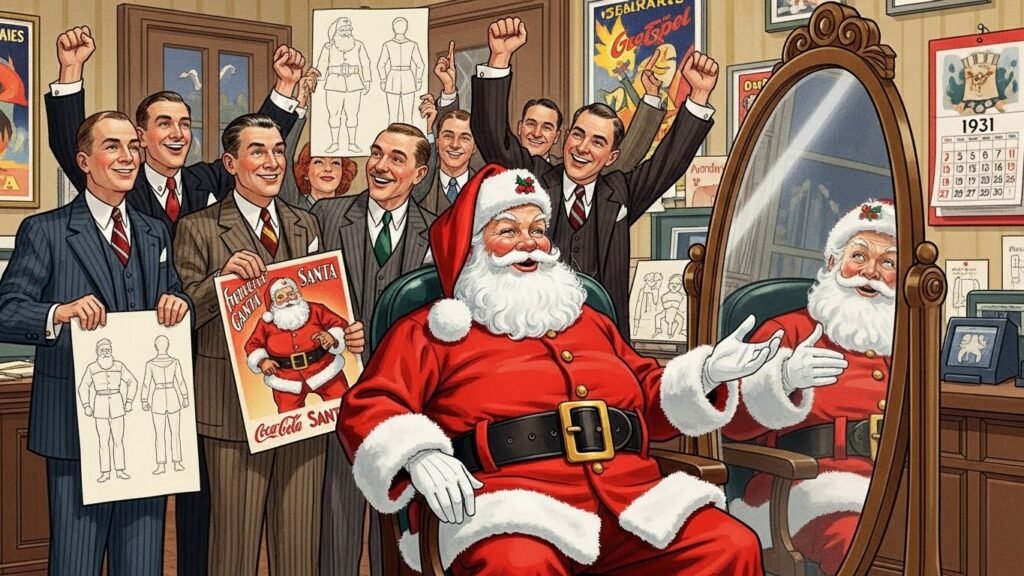
Haddon Sundblom was the artist who changed everything. He was a talented illustrator who worked for Coca-Cola. In 1931, the company hired him to create a new Santa for their holiday ads. They wanted something fresh and appealing.
The Coca-Cola Revolution
Here’s where the magic happened. Before this, most Santa pictures showed him in different scenes—checking his list, flying through the sky, or visiting homes. Coca-Cola had a simple idea. They wanted Santa to be shown enjoying their soda pop, having fun, and looking friendly.
Sundblom studied old descriptions of Santa and started painting. He created a Santa that was tall, round, and cheerful. He gave Santa that big white beard we all know. He put him in a red suit with white trim—the colors of Coca-Cola, of course. Most importantly, he made Santa look like someone’s kind grandfather. Friendly, warm, and full of joy.
The first ad appeared in 1931 in magazines like The Saturday Evening Post. People loved it! For the next 35 years, Sundblom kept painting Santa for Coca-Cola. Each year, the image got more polished and familiar. Those ads ran in newspapers, magazines, and stores all across America.
The Legacy Lives On
Today, when you watch Christmas movies, see decorations, or look at holiday cards, you still see Sundblom’s Santa. That red suit, the white beard, the round belly—it’s all there. The Coca-Cola Santa became the standard for the whole world.
Think about mall Santas today. They dress in that exact red suit. Elf helpers, toys, reindeer, the North Pole workshop—all of these things became standard because of how Coca-Cola imagery shaped our expectations.
The funny thing is, Coca-Cola never intended to create the “official” Santa. They just wanted to sell soda pop. But by making Santa so appealing and memorable, they accidentally gave the world its permanent picture of St. Nicholas.Why This Image Stuck
What We Learned
The story of Santa’s appearance shows how powerful images and advertising can be. One company’s marketing campaign changed how an entire culture imagines a beloved character. Before the 1930s, Santa could be small, elf-like, or look however you imagined him. After Coca-Cola’s ads, there was suddenly one “right” way to picture Santa.
Next time you see a Santa decoration or watch a holiday special, remember that you’re looking at a version of Santa that an artist created back in 1931. The jolly, red-suited, big-bearded Santa you know and love isn’t ancient—he’s only about 90 years old! And he got his famous look all because a soda company wanted to sell more drinks during the holidays.
Now that’s what I call holiday magic with a side of marketing genius!
So why did this particular version of Santa become THE Santa? There are a few good reasons.
First, Coca-Cola’s ads were everywhere. During the holiday season, you couldn’t miss them. Kids saw them in magazines at their houses. Parents saw them in newspapers. Store displays featured them. The image repeated over and over, year after year. Eventually, it became the default picture in everyone’s mind.
Second, the timing was perfect. The 1930s were tough times—the Great Depression was happening. People needed hope and joy. Santa’s cheerful, generous personality in those ads gave people something to smile about. A jolly gift-giver was exactly what the world needed during hard times.
Third, the image just worked. Sundblom created a Santa that checked all the boxes. He looked magical but also real enough that you could believe he might visit your house. He was big enough to be the boss of his workshop but friendly enough to sit on your lap. The combination was unbeatable.